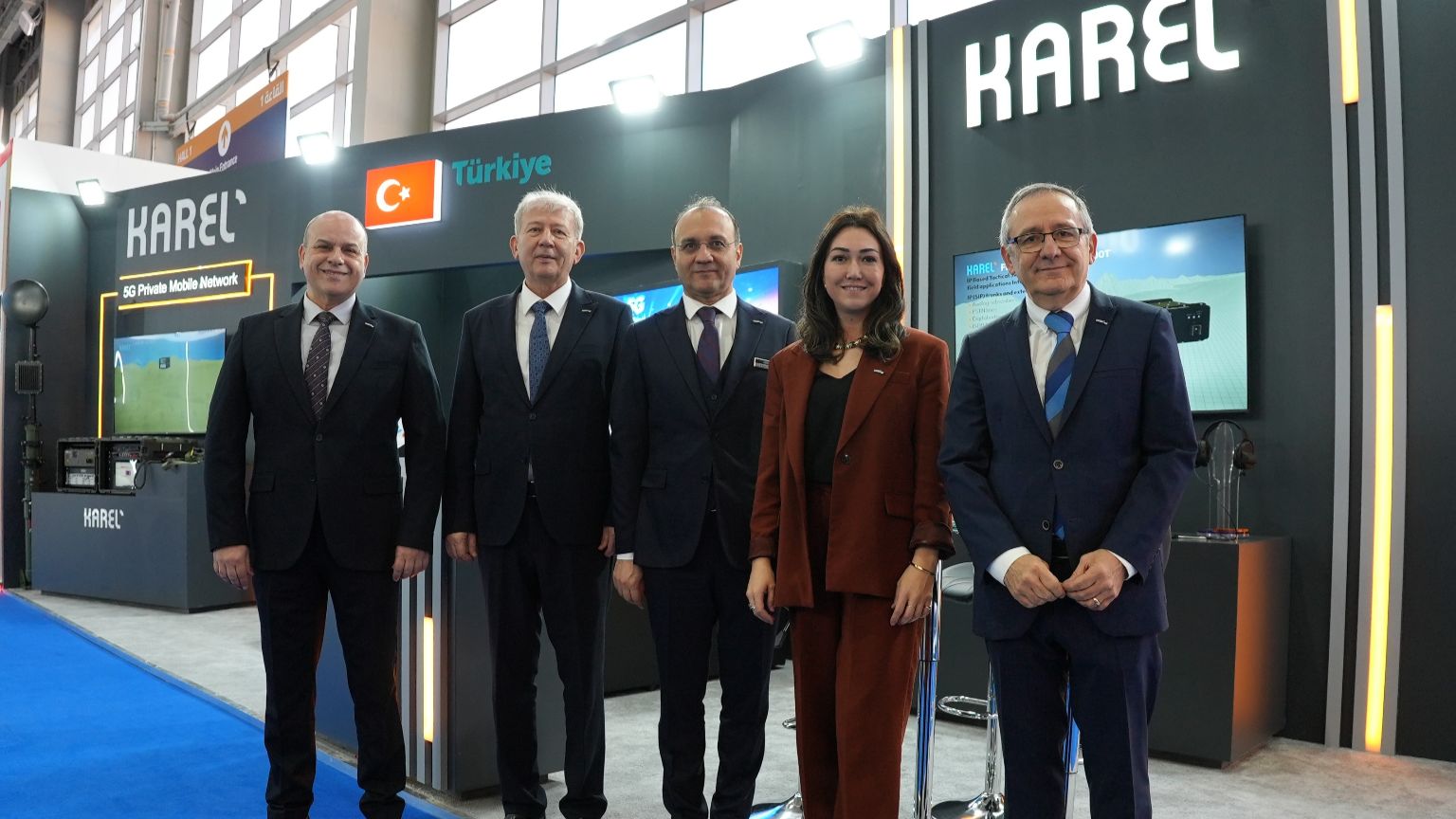
In a world of accelerating technological evolution, military strength is no longer measured solely by the size of the arsenal or the number of troops on the ground, but by the ability of armies to “communicate” and link their systems in real-time.
The battlefield has transformed from a mere geography of conflict into a complex network of data, where “information” constitutes the most critical ammunition. At the heart of this transformation stand defense technology companies building the “nervous system” of modern armies—systems that ensure the seamless and secure flow of orders and data.
The future of defense and security does not lie in importing ready-made “black boxes,” but in building strategic partnerships aimed at the localization of advanced communication, command, control, computers, and intelligence (C4I) technologies. This is the model presented by the Turkish company Karel as an alternative approach based on flexibility, technical integration, and the transfer of sovereign knowledge to partner nations, particularly in the Middle East.
From Telephone Exchanges to Tactical Superiority
The story of “Karel” is not merely that of a traditional defense company. As Yavuz Bayiz, Head of the Defense Technologies Sector at Karel, noted in his recent remarks to Defense Arabia during the World Defense Show, the company’s roots extend back many years as a pillar of telecommunications in Turkey. It began by developing public telephone exchanges before transferring its broad expertise to the military sector. This transition was not just a change in clientele, but the application of deep engineering expertise in civil communications to serve complex military purposes.
The strength of this approach lies in the ability to integrate modern technologies—such as Internet Protocols (IP) and 5G—into hardened military hardware. In modern warfare, a soldier requires the same speed and efficiency of communication provided by a smartphone, but with military standards of security and durability. Here, Karel’s prowess shines in converting commercial technology into tactical solutions capable of withstanding the harshest conditions.
Lessons from Modern Conflicts: Data is the New Commander
One cannot discuss the development of defense systems in isolation from field reality. Recent conflicts around the world have proven that military doctrine has changed fundamentally. Bayiz explains that current events and wars clearly show that operational methods have shifted. It is no longer just about firing weapons, but about gathering data from the area of operations via radars and sensors, processing it in milliseconds, and then distributing it to combat units.
Imagine a field scenario: A UAV captures an image of a hostile area of operations. This image is not just a snapshot; it is vital information that must reach air defense systems, fire support units, and soldiers on the ground immediately to facilitate the appropriate decision. This “System of Systems” is what Karel is engineering. Without a reliable and fast communications network, the drone and the tank become merely isolated pieces of iron, rendering the army blind and deaf in the face of a network-centric enemy.
Technological Sovereignty and the Partnership Model with Saudi Arabia
Perhaps the most fundamental point in Karel’s strategy—distinguishing it from many major Western companies—is its flexibility regarding “Technology Transfer.” In the global defense market, major powers often guard their technical secrets, contenting themselves with selling the final product. Karel, however, proposes a different model based on genuine partnership with local actors.
In the context of the Saudi market, Bayiz emphasized the company’s full readiness to transfer technology to local partners in the Kingdom of Saudi Arabia. This direction aligns perfectly with Saudi Vision 2030, which aims to localize 50% of military spending. Karel is not simply offering to sell radios or communication stations; it is offering to establish local industrial capability and is negotiating to empower local companies to manufacture and develop these systems. This means the Kingdom will not merely be a user of the technology, but an owner of it, thereby reinforcing its strategic independence and the security of its supply chains.
Towards Secure Digital Independence
An in-depth analysis of Yavuz Bayiz’s points leads to a crucial conclusion: The future belongs not only to those who possess the most powerful weapons but to those who possess the smartest and most independent “nervous system.” The shift of companies like Karel toward integrating advanced civil communication technologies into the military sphere, combined with an openness to transferring technology to ambitious nations like Saudi Arabia, is drawing new contours for the regional defense map.
Decision-makers and military leaders today must realize that investing in military communications infrastructure and localizing its industry is not a technological luxury; it is the cornerstone of national security. In the coming battle, victory will belong to those who can move “data” before “ammunition.”
Source: Defense Arabia